


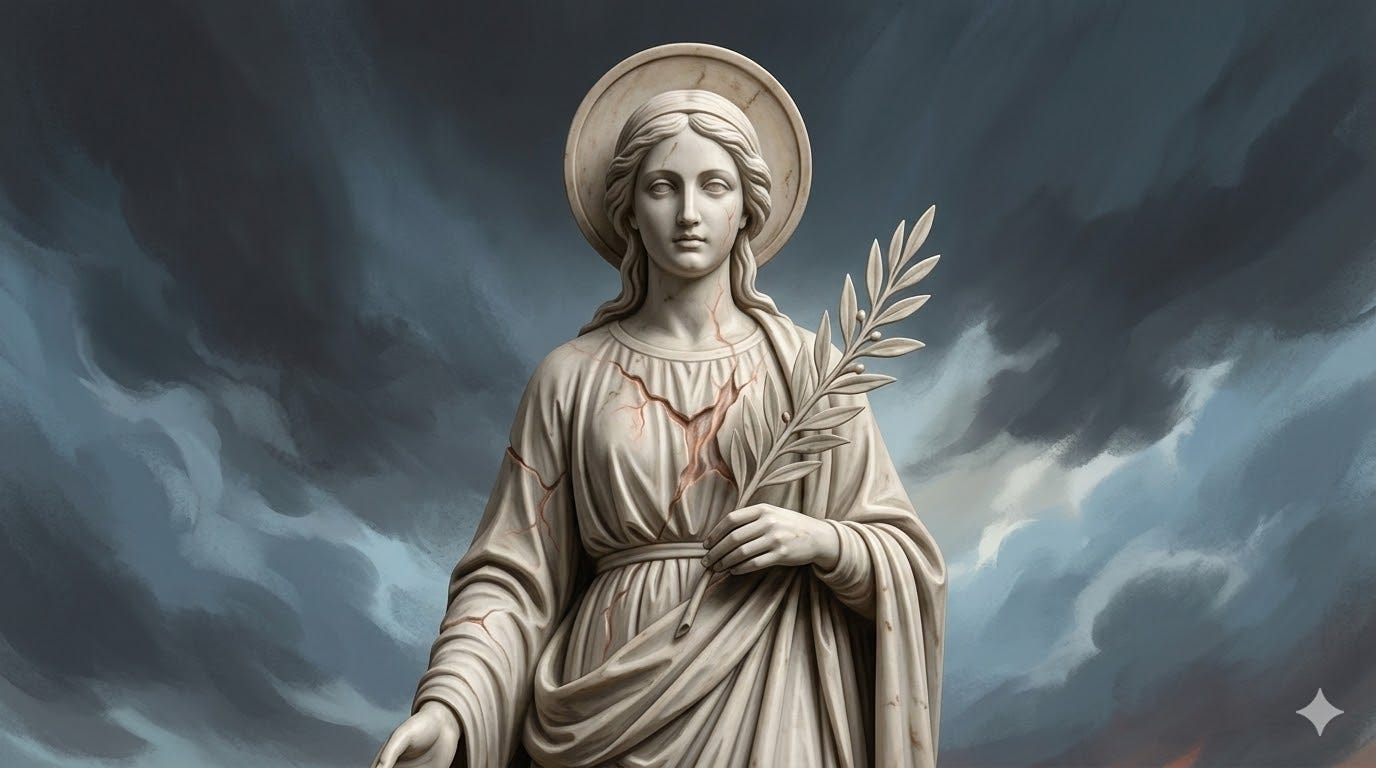
In the free article this week we explored Carl Jung’s concept of the Persona and the subtle archetype of the polished saint. Many Christians recognize this dynamic almost immediately once it is named. Something inside us remembers moments when faith began to feel performative—when we learned which emotions to hide, which questions to suppress, and which parts of ourselves needed to be carefully edited in order to remain spiritually acceptable within our communities.
The difficulty with the Persona is not simply that it hides aspects of the self. The deeper problem is that, over time, we begin to believe that the mask is actually who we are. The role that once helped us survive socially gradually becomes the identity we inhabit spiritually. When this happens, a believer may appear spiritually mature from the outside while the inner life quietly becomes constricted, exhausted, or even numb.
This is why the Holy Spirit does not simply “improve” the Persona. As we explored earlier in the Inner Exodus series, the Spirit’s work is far more radical. Rather than polishing the version of ourselves that formed through adaptation, the Spirit begins inviting us into a much deeper process: the emergence of the true self in Christ.
Recognizing how the Persona forms is the first step toward this freedom.
The Three Forms of the Christian Persona
In Christian environments the Persona tends to appear in recognizable patterns. Although each person’s story is unique, these three forms appear frequently within church culture. Many readers will find themselves recognizing pieces of their own experience within one of these identities. (Although not exclusive, it is unlikely that one of these three does not resonate with you).
