


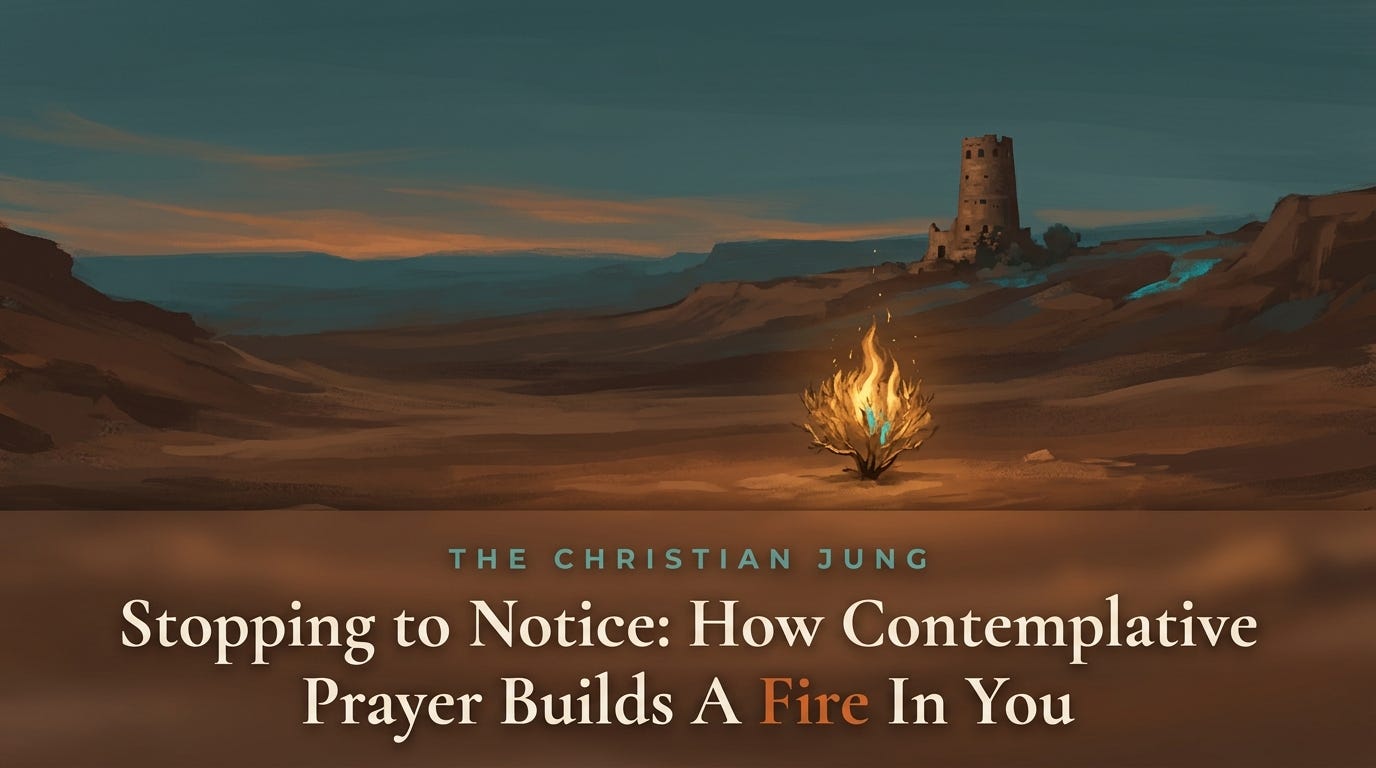
As a child on the mission field, I walked by a mural on the wall of the base every day on my way to eat. It was a large fire and the verse, “Our God is a consuming fire”, written below it. The verse felt like a threat; it tied God and the eternal fires of hell together, and I hated looking at it because all it brought up was fear.
As an adult with two psychology degrees under my belt, I now know that we all have some degree of internalized fear about how we understood the religion of our childhood, or even if you are saved as an adult, there is still this threat out there that we don’t fully understand God, and that is something to be fearful about.
In some of my other podcasts and articles, I've talked about the awe of God, the wonder of God and yes, even the good aspects of the fear of God, but here I want to turn your attention to how the fire is the beginning of the contemplative journey and how God as fire has a counterpoint in the human design that you need to know how to activate.
We are going to talk about:
The first building block of contemplative Christianity that you must have in place to receive communication with God
The meeting of minds – the dinner conversation between Einstein and Jung
How God’s Fire is the invitation you’ve been waiting to receive
Where We Are in the Journey
I write about the intersection of contemplative Christianity and Jungian psychology, and I do that in a sustained, deep-work kind of way, where 10 weeks of articles build on themes so you get the deeper stuff, not just the fluff. Over the last few weeks, we’ve taken up the idea of contemplative Christianity, the ancient practice of prayer, meditation, and conversation with God that has endured since Christianity began. We look at how Jung used mystics and saints to understand the psyche and how it longs for the contemplative lifestyle.
The Fire of Invitation
The story I told about the God of threat- our God is a consuming fire- is part of how we are wired biologically. We are wired to need to understand; our understanding leads to greater safety. We’ve seen this in how the body responds to different doctrines and how it might cause nervous system dysregulation or fight, flight, or fawn tendencies. The idea of God has been grappled with for at least 8,000 years, and at the core of that idea is the belief that God is something to be feared. We fear Him because we don’t understand Him. Which is why so much of theology today scares me.
We intellectualize our theology so we don’t have to deal with our fear of God.
It is a reflex that has been firing for at least 100 years; however, I believe much longer. Our desire to know is no longer built upon the mystery; it is built upon the fear. And when we get to verses like “Our God is a consuming fire,” we chalk it up to poetic license and never stop to see the God behind the verse.
What if He is hoping you’ll stop like Moses at the burning bush and find out?
Nepsis: the Burning Bush of the Desert Fathers
Two thousand years ago, early Christians started moving out to the desert of Egypt. They banded together in communities and wrote about their experiences of getting to know God better. We call them the Desert Fathers and Mothers, and today we still draw on their practices to understand God. One of the building blocks of the contemplative practices of the early church was a word called “Nepsis”, which means watchfulness, sobriety, and vigilance. Think of the watchmen that warned of impending danger, or the prophet Habakkuk who “stood on the rampart to see what God would say to Him”. In each of these cases, the idea of nepsis is used.
Nepsis is when we observe our inner and outer life like watchmen, looking for signs of God’s invitation. Moses, when he saw the burning bush that was not consumed, turned, and it says in Exodus 3, “So Moses thought, 'I will go over and see this strange sight—why the bush does not burn up." Nepsis is the going and seeing; it is a curiosity that perhaps God is in the bush!
Now that may seem completely removed from your everyday life, but in fact it is not. Check out this story about Einstein meeting with Carl Jung, and you will see what these great men can teach us about nepsis.
The Dinner I Want an Invitation To
When people ask the question “If you could have a dinner with any real people, living or dead, who would it be?” I immediately think of this: Einstein was invited over to dinner at Jung’s house in Switzerland, and though we don’t have a lot from that conversation, the parts we do have are pretty incredible.
Between 1909 and 1913, apparently Einstein was a regular at Jung’s house. They would often compare their theories, and Jung described Einstein as a gentle person who helped him understand the math behind his equations. The two also often invited other physicists to dinner, and that is where Jung’s early ideas on the acausal synchronicity principle began to take shape.
What is truly remarkable about these two men was that they both cultivated a deep sense of nepsis; that is, they looked for things in their life that aroused curiosity and were able to develop deep patterns of leaning into the answers from the inner and outer life. Like Moses, they would turn aside to look at whatever interested them.
What Makes You Burn?
Nepsis is turning toward something and asking questions, questions like:
Is this possibly an answer from God for me?
Is God speaking to me through this image, number, or something someone said to me?
Does this inner prompting I keep having mean God’s pointing at it? Does He want me to be curious about it?
Is this inner feeling something that God wants me to cultivate?
Now, like anything else in the spiritual life, we must use discernment. In fact, the early church fathers also used nepsis to discern if the enemy was trying to catch them in a trap!
But keep in mind that sometimes God wants you to cultivate an interest, career, or relationship, and He will use nepsis to help you burn as an invitation. You see, the fire of God is not a defeat of you, or who you are. It's a defeat of the false self, the curated self, the one we built to be accepted. He will help you burn toward the things He placed in you, and often that burning will also burn away anything that isn’t of Him! The sixteenth-century mystic John of the Cross described it with an image: a log of wood placed in a fire. First the fire dries it out, then it blackens it, and the log looks worse than before. But slowly the fire begins to work its way in, until the wood begins to glow, and finally the log itself becomes fire. That's what His consuming fire does; it doesn't leave ashes. It makes you burn.
In the Paid Article this Week
John of the Cross on the log and the flame: what the dark, smoky stage of growth is really doing
The Refiner's Fire Examen a 15-minute evening prayer for Nepsis: where you performed and where you were real, step by step
Three short companion practices for your body, your prayer, and your journal
Four Scripture-rooted tests for telling God's refining fire from shame, with journaling questions and a seven-day tracker
Each week we offer a new contemplative prayer devotional, yours for just $12/month.
I agree wholeheartedly with bringing Exodus 3 and St. John of the Cross into the discussion.
When I taught Hebrew Scriptures to High School Freshman, I used to take time looking at Exodus 3 and how God pulled Moses towards him through his own natural curiosity and wonder. It’s a great passage.
I've read a few works by St. John of the Cross. I was introduced to him through the Spiritual Canticle, and this was my first introduction to the mystical life and the idea of a relationship with God. It was part of the backdrop for a real conversion of life.
I look forward to more in this series!